We can only hope. This is by far the most common sense decision they can make. The Forest FMO shouldn’t supervise wildlife biologists, and DRs shouldn’t supervise the fire staff.
6 Likes
More things that make me go, hmm?!
2 Likes
A bit more on the story. I was very intrigued to read this:
"Fire and Aviation Management Deputy Chief Sarah Fisher said on the podcast that the reorganization would not have an impact on the Service’s wildland fire program, saying no changes would be made to the firefighting workforce.
“There should not be expected changes for folks that are working on districts and forests,” Fisher said. “None of this work being done is impactful to the districts and forest facilities, and at this time, there are no intended changes to the locations of the geographic area coordination centers.”
2 Likes
Obviously has a left lean to the article but seems there’s a lot more to this then just making wildfire on fed lands a priority
2 Likes
A lot more propaganda then accurate information.
1 Like
I don’t know. Track records speak for themselves. Time will tell but I hope the article is way off and just propaganda as well
2 Likes
Incase anyone else is curious about the laws that got us to where we are today with respect to this topic & will the baby get thrown out with the bathwater - i submit GROK’s reply to my question..
Question = What Law was created to establish National Forests & Why was it needed?
The Forest Reserve Act of 1891 (also known as the Creative Act or Section 24 of the General Revision Act) is the law that created the foundation for the U.S. national forests. Signed by President Benjamin Harrison on March 3, 1891, it authorized the president to set aside public lands bearing forests (in any state or territory with public domain lands) as “public reservations,” which became known as forest reserves. These were later renamed national forests in 1907.
Key Provision of the Law.
The critical one-sentence rider (Section 24) stated that the president could, by proclamation, reserve portions of the public lands “wholly or in part covered with timber or undergrowth, whether of commercial value or not,” as protected areas. This shifted federal land policy from rapid disposal (selling or giving away public lands to private parties) toward retention and conservation for public benefit. The first reserve, the Yellowstone Park Timberland Reserve, was established shortly after by President Harrison.
A follow-up law, the Organic Administration Act of 1897 (also called the Forest Service Organic Act), provided the management framework. It specified that forest reserves existed “to improve and protect the forest within the reservation, or for the purpose of securing favorable conditions of water flows, and to furnish a continuous supply of timber for the use and necessities of citizens of the United States.”
Why the Law Was Needed.
In the late 19th century, America’s forests—especially in the West—faced rapid, unsustainable exploitation due to:
Unregulated logging and timber theft: Private interests and speculators heavily harvested timber on public lands with little oversight. Laws like the Timber Culture Act of 1873 and Timber and Stone Act of 1878 were widely abused through fraud, allowing large-scale clear-cutting and land grabs rather than genuine settlement or tree planting.
Deforestation and environmental damage: Widespread clearing led to soil erosion, degraded watersheds, increased flooding risks, and loss of timber resources that were once seen as “endless.” Concerns grew about long-term impacts on water supplies for agriculture, navigation, and communities, as well as the potential exhaustion of commercial timber supplies.
Broader conservation awakening. Influenced by figures like Franklin B. Hough (early head of the Division of Forestry) and growing public/scientific awareness (e.g., from George Perkins Marsh’s writings), there was a push to move away from pure “disposal” of public lands toward sustainable management. Two decades of debate highlighted the need for federal intervention to prevent wasteful destruction while still allowing for future resource use.
The act was a pragmatic response: it didn’t immediately ban all use but gave the executive branch tools to protect key forested areas from immediate over-exploitation, laying the groundwork for the U.S. Forest Service (established in 1905 under Gifford Pinchot) to manage them actively. Presidents like Harrison, Grover Cleveland, and especially Theodore Roosevelt used this authority extensively—Roosevelt alone added vast acreage—creating a system that now spans nearly 200 million acres focused on multiple uses (timber, water, recreation, wildlife, etc.) under sustained-yield principles.
Later laws, such as the Weeks Act of 1911 (which allowed purchase of private eastern lands for national forests) and the National Forest Management Act of 1976 (which added detailed planning and environmental standards), built on this foundation but addressed different eras of management challenges.
In short, the 1891 law marked the beginning of systematic federal forest conservation in the U.S., driven by the urgent need to curb exploitation and safeguard resources for future generations amid rapid westward expansion and industrialization.
3 Likes
Thank you.
She doesn’t address any changes to lines of supervision directly does she?
2 Likes
I have heard no detail/facts regarding any planned changes. Doesn’t mean they havent been provided somewhere - i just have yet to hear any.
She is saying / implying that FS Districts & Forests wont change - that seems odd given that everything above the Forest level is changing quite dramatically.
Wondering if looking at how the new US Wildland Fire Service will be changing/structuring (or not) the BLM org charts might provide a peek at things to come for the FS? 
I see who has been drafting, positioning, advocating and sponsoring all this “restructuring of the USFS” and it does not make me feel good at all. I do not trust them and until they prove to “we the people” that they can be trusted - i remain firmly on the fence. Still way more questions than answers for my liking.. Not that it maters.. 
1 Like
April 1st from the Chief:
- Headquarters relocation: Moving the Forest Service HQ from Washington, D.C., to Salt Lake City, Utah, to place leadership closer to the majority of the lands managed (primarily in the West).
- Shift from regional to state-based model: Eliminating the traditional nine regional offices and research station structures. Instead, the agency will establish 15 state directors (some overseeing multiple states) for more direct accountability and partnerships with states, tribes, and local communities.
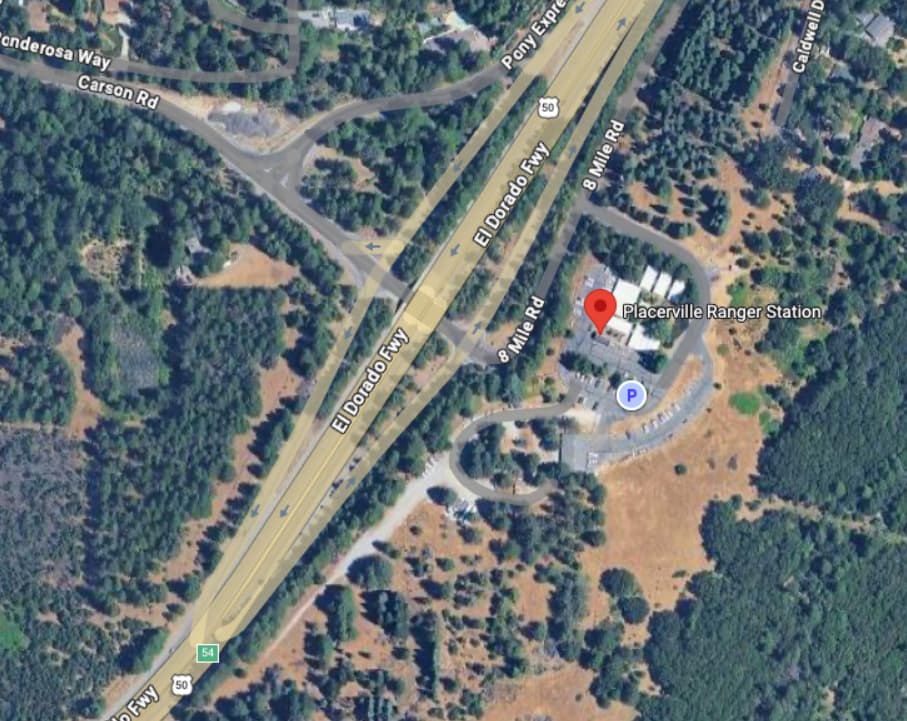
- Operational service centers: Many functions from regional offices will move to six shared hubs: Albuquerque (NM), Athens (GA), Fort Collins (CO), Madison (WI), Missoula (MT), and Placerville, Ca.**
**.
- Research consolidation: Research and development facilities will consolidate under a unified national enterprise (headquartered in Fort Collins, CO), with closures or repurposing of many sites across 31+ states.
- Phased implementation: An Interim Operations structure stays in place for continuity. Full transition (including formal elimination of regional/station structures) will roll out over the coming year, with additional phases and guidance provided.
Important Protections for Fire Operations
Chief Schultz explicitly states that today’s announcement does not affect the Fire and Aviation Management program.
4 Likes
What is not being talked about enough is the shuttering of science/research labs that directly affect wildland fire. There are literally dozens of research labs/forests/centers that have congressionally approved funding that are being denied funding by the OMB. Once these research projects are shut down you can’t just start them up again with a new federal administration. The personnel and time will be gone and lost.
5 Likes
An attempt at setting the record straight (allegedly) on a few things..
https://www.fs.usda.gov/about-agency/reorganization?fbclid=IwY2xjawRE-B5leHRuA2FlbQIxMABicmlkETFBYm0wYjVRdENhSEtVOTRwc3J0YwZhcHBfaWQQMjIyMDM5MTc4ODIwMDg5MgABHiFeWMnzDs49fsmxSm_vjFRO46Exv-DE9MpdA3OqLVhR2-AjZZydKmu-0m0N_aem_52EDHMSPGndqUZBQ-cGq8w
1 Like
“Experts” weigh in..
4/21, Edit to include this..
2 Likes
Some meat on the bones of #transition..
2 Likes
Looking to confirm from anyone over in DOI that Fire Management Officers are now going to have the responsibility to be agency administrators for wildland fires? If so, what level of FMO’s will take on this responsibility?
1 Like

1 Like
Wonder why grassroots and USWFS leadership haven’t asked the for vacancy rates of firefighter positions from the legacy bureau fire programs within DOI.
1 Like
And now this..
3 Likes