Flawless execution under heavy criticism and adverse forecast. SKU,KNF,PBA, South Yreka Fire
Night burns are the best. Really cool video!
Kudos to the Firing Boss!
Video about this week’s burn above Nevada City.
File this clip under Fuel Samples & Fuel Moisture..
That was GOLD!!! Thanks for sharing…
Are We Treating Acres—or Maintaining Landscapes?
I would like to start a discussion about prescribed fire and fuel treatment—not whether it has value, because there is good evidence that properly placed treatments can reduce fire intensity, improve firefighter access and lower the likelihood of severe fire effects. My question is whether we currently have the capacity to maintain those benefits over time.
This is really a two-part question.
First: How long does a treatment remain effective?
You can prescribe-burn an area and see an obvious reduction in surface fuel and understory vegetation. But return a year or three later—especially after favorable growing seasons—and portions of it may look remarkably similar to the pre-treatment condition.
That does not necessarily mean the original treatment failed. The larger fuels, ladder-fuel arrangement and stand structure may still be different even when the ground appears green and brushy again. But fine fuels, sprouts, grass, brush and dead material begin accumulating almost immediately.
Depending on vegetation type, treatment objectives and site productivity, some areas may require follow-up work within roughly three to ten years. In especially productive grass, oak woodland or brush environments, maintenance could be needed sooner. Other forest treatments—particularly mechanical thinning that changes stand structure—may retain some benefits considerably longer. There is no single statewide treatment interval. California includes everything from fast-growing foothill vegetation to mixed-conifer forest and chaparral, where burning too frequently may actually cause ecological harm.
So should we stop thinking of prescribed fire as a completed project and instead view it as the beginning of a maintenance cycle?
Second: Is maintaining these treatments feasible at our present pace?
California established a joint state-federal objective of treating at least one million acres annually. The latest complete statewide accounting reported more than one million treatment activities in 2023, but those activities occurred on approximately 700,000 unique acres. An acre that is thinned and later burned may be counted as two treatment activities even though it remains one acre on the landscape. (California Wildfire & Forest Resilience)
That raises a difficult capacity question. If a meaningful portion of those 700,000 acres must be revisited every few years, maintenance treatments will eventually consume an increasing share of our crews, funding, burn windows, planning capacity and available smoke-production days.
Prescribed fire clearly can make a difference when wildfire reaches a treatment at the right age, under conditions the treatment was designed to influence. But it is not permanent armor, and under extreme wind and fuel-moisture conditions it may modify fire behavior rather than stop the fire.
Are we building a sustainable landscape-maintenance program—or are we accumulating treated acres that we may not have the capacity to revisit?
How long are we actually seeing treatments remain operationally useful?
Are agencies adequately funding maintenance, or mainly funding new acreage?
And considering California’s size, vegetation productivity and burn windows, is the current treatment model truly scalable?
Some what if’s that come to my mind after reading your really thoughtful post..
What if Ethics are luxuries?
What if the current Ecosystem Management, Conservation Ethic, Prescribed Fire Ethic, Vegetation Management Ethic Et al are “fleeting luxuries” afforded to us because of the period of geologic time we happen to occupy AND the current state of ever-present change we find our planet in?
Its factual that there are periods of time where there is nothing to burn, protect or manage in the places where we currently worry about those things. Its also factual that there are periods of time and instances where conditions are much worse (in many ways) than they are now and huge amounts of surface biomass burn in mega burning events that none of us in modern times have seen. The geologic record, ice cores, tree ring studies, sediment layers (in bodies of water & on land) and various other proxies have provided ample evidence of this.
What if despite the current outlook and challenges we see ahead - we’re actually “lucky” to live in the period of Inter-Glacial time we happen to occupy now? I can see that there must be times on the shoulders of glaciation, warming and cataclysm’s (all of which are factual occurring themes of Earths geologic story) when human mindsets must shift away from such “ethics luxuries” mentioned above - toward resource gathering & protection from external threats/stimuli taking place on the planets surface. In those times there is no bandwidth for smokey bear/woodsy owl/sierra club, etc ethics.
I once worried (like many do) that given current treatment methods, resources & capacity there is ZERO way that we can treat at scale and/or keep up with the prescriptions needed to sustain the areas we do treat. Now i think more in terms of humans will be forced (by nature or otherwise) to react differently than we do now and it will be a mater of survival rather than a mater of fire protection/ecosystem management.
What if the way we currently address treating/preparing for the long term really isn’t a long term strategy/tactic or solution at all?
Last thing..
When i was a Fuels Officer it was part of my job to react and spend bandwidth worrying about why ponderosa pines, as one example, have been retreating from one elevation to another and all sorts of things like that in planning/writing burn plan and/or land and resource managment plan objectives. Its considered a fuels conversion or an unwanted/undesired outcome of f100 yrs of ire suppression and /or a disturbance - disturbances are important to the plan writers & managers & models. Well, what about the Volcano’s that are bookending my Forest? Don’t they count as disturbances that should be considered/planned for and around? Im my mind yes they are - in the minds of other lifer decision makers and managers it’s not something worth spending Time, Talent or Treasure on in the planning phase. Administratively there is no room for it so i would stick to planing & managing for “firefighter safety” and what is going to directly impact flame lengths, heights, ROS, BTU’s irregardless of how a fire starts. And to what result - I helped to WUI ourselves into a situation where WUI’s are a trouble spot more than a firesafe place bcuz WUI’a also burn under the right conditions! I think this is all is a glaring example of not thinking or planning in the right ways temporally or spatially or realistically and its a sign of blind spots/amnesia that we (and our administrative processes & models) all suffer from..
None of the above is anything but thoughts triggered by your post. I hope it doesn’t come across as pissy, mad, sad, glad, doom/gloom or anything besides thoughts of someone who cares about these conversations as you and others who frequent this site do..
Meanwhile, folks are burning in the Klamath, all summer. This burn is not far from the Milepost 18 Fire.
Some of them are night burns, but Cal Fire is issuing permits, and good work is getting done.
A lot of trust has been built here in the past decade.
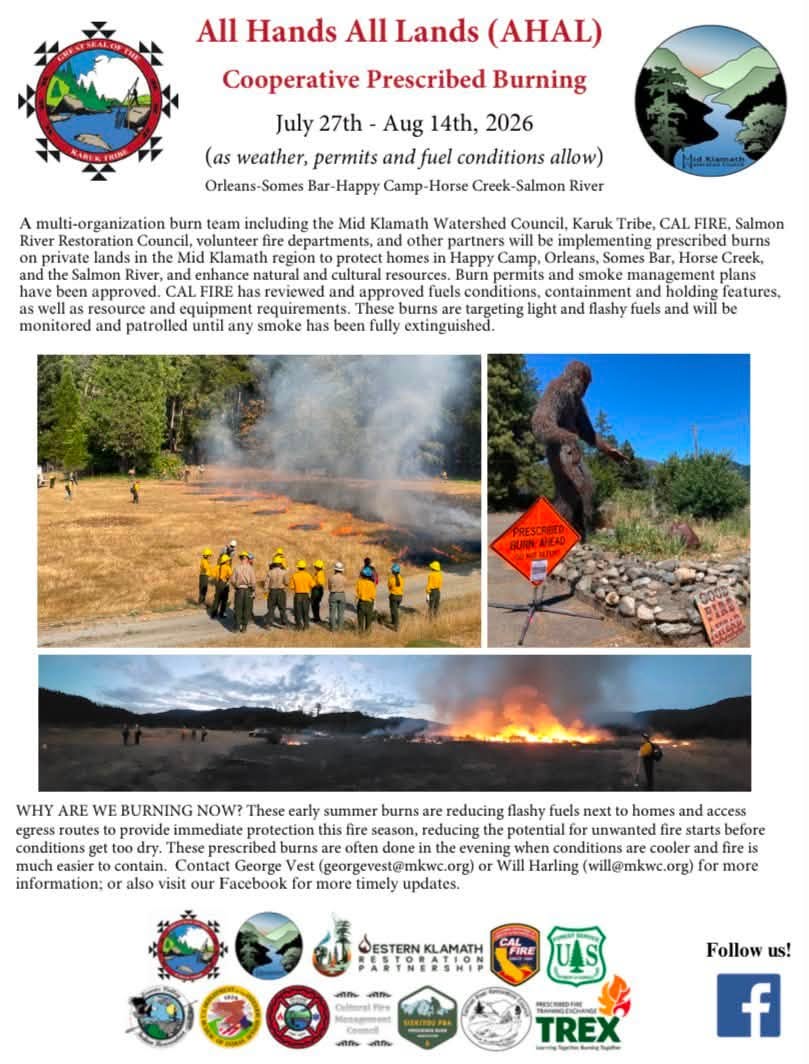
Extended discussion about summertime prescribed fire that’s ongoing in the Klamath this year, tonight, on The Lookout.
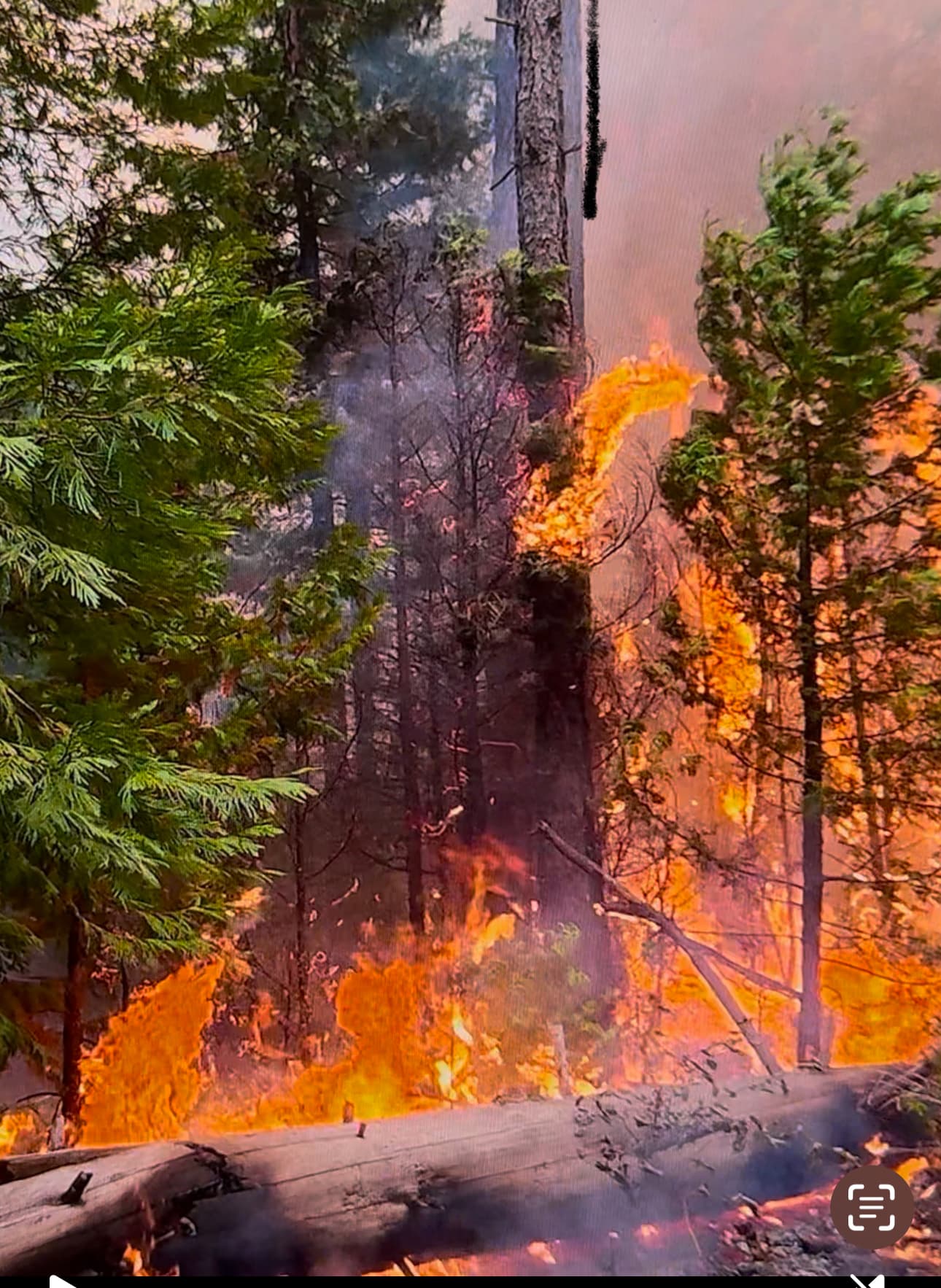
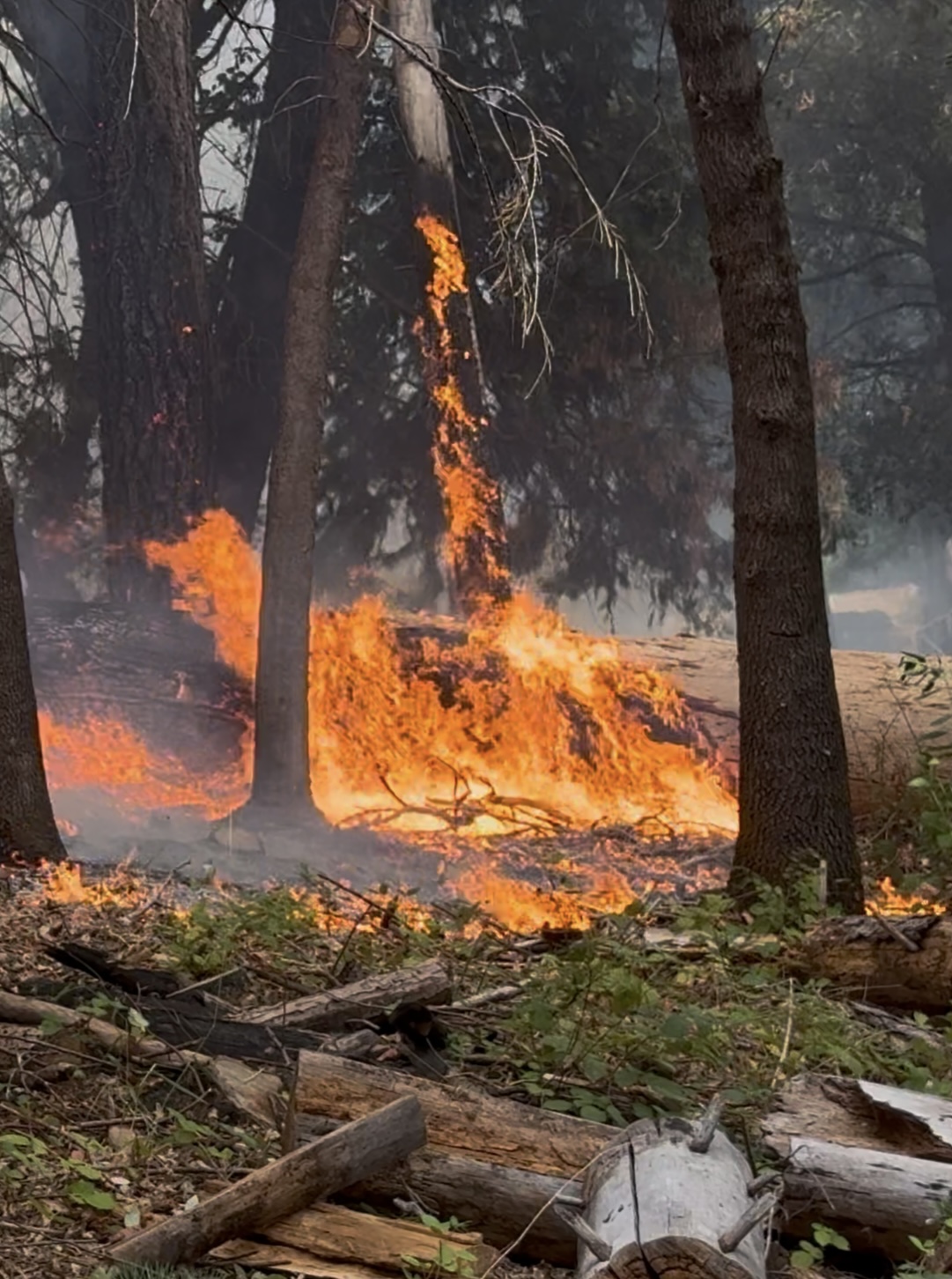
Good day of burning in North Bloomfield Road area above Nevada City. 8 acres of understory including an acre a unthinned cedar saplings that were greatly reduced with some good torching.
64 degrees and 62% RH was stable, didn’t light til 1100 due to poor consumption on test fires yesterday before then. winds 3-5 or so.
Heavy dead and down from previous bug kill, and lots of blackberries. Some of the unit had been pile burned this spring. Lots of madrone and sugar pine litter, some black oak. Houses at top and on one side of the unit.
No holding issues. Unit was plumbed with 1.5”, a water buffalo, and a couple QTAC skid units. Burn led by First Rain Land Stewardship for a private client, with about a dozen people. No agency participation, not even a drop by.
And a person on Instagram is trying to get your burn shut down.
Welcome to Nevada County
This is what I call progress.
Progress, indeed.
Rough footage from the burn here.
Tis the season!
I keep seeing them working around here but I have to wonder, do the dollars and cents add up? How much treatment is getting done vs how much there is to do, and can only rich people afford it?
First Rain helped their neighbors get an NRCS EQIP grant that paid for them to thin, pile, and burn. The last project I filmed for them was a private client that paid outright, I believe.